

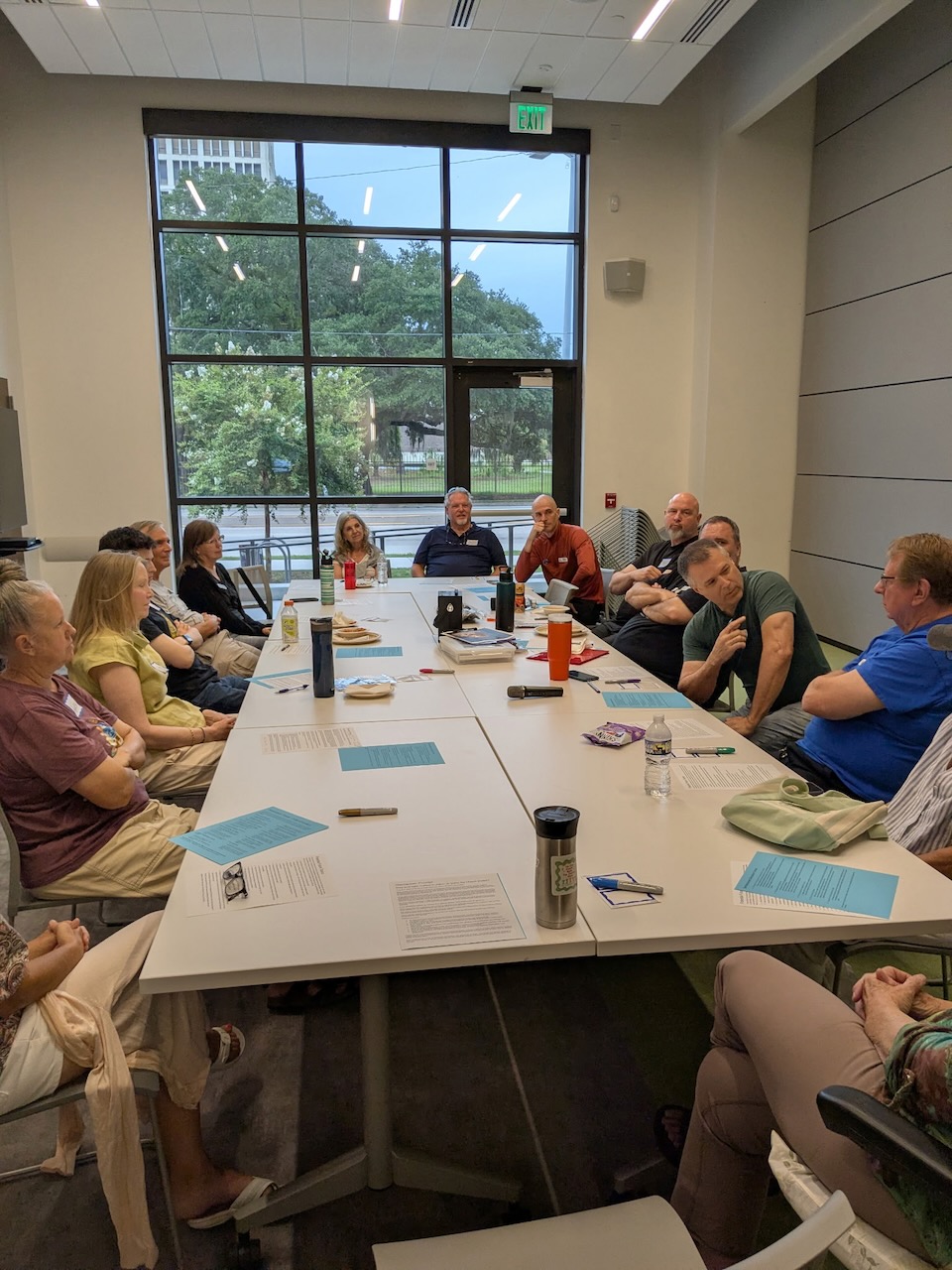
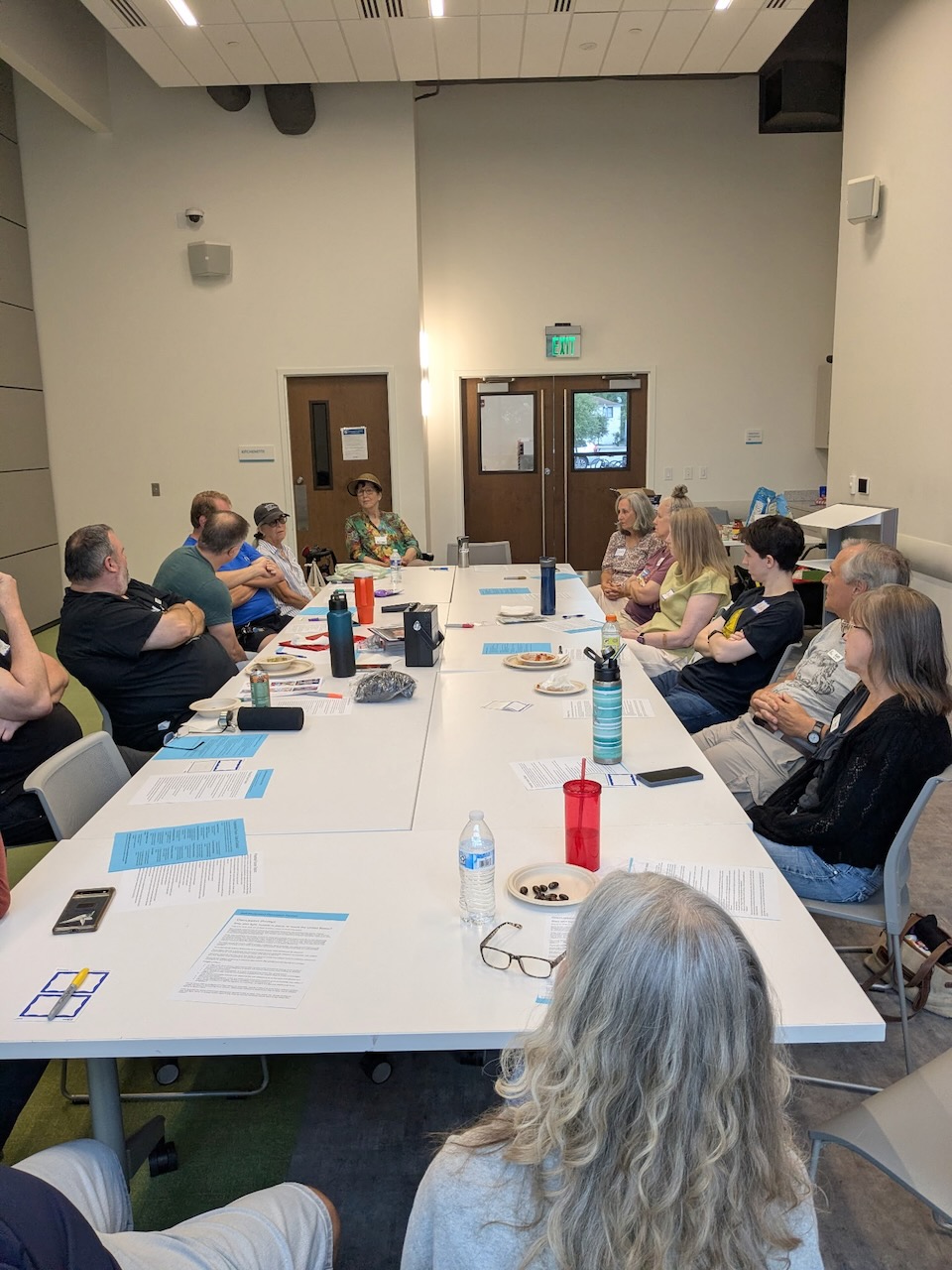
There are many great benefits to being part of a supportive community of like-minded humanists, but one of the best is being able to sit together and talk through anxieties. Knowing that we are in this together may not eliminate those anxieties, but it certainly eases them. Sixteen thoughtful humanists gathered for our monthly Freethinkers’ Forum to talk through our anxieties about the state of American democracy on August 6, 2026, as we discussed the question, “Stay and fight, hunker in place, or leave the United States?” While most participants feel a duty to stay and fight, there was a general recognition that conditions may deteriorate to a point where those who can might want to get out. The primary challenge is drawing the line to know when it is time to get out. Most of us feel like we don’t know how to draw that line, and fear that by the time we decide it is time to go, it may be too late. Heavy stuff. But airing the anxieties, sharing what we have done and can do, and sharing our individual perspectives was cathartic, encouraging, and soothing. A big thank you to everyone who showed up to participate in our discussion.
Discussion Prompt:
Many people assumed that our country’s constitutional democracy was fundamentally secure. Political disagreements were expected, but the basic institutions of liberal democracy—the peaceful transfer of power, an independent judiciary, free elections, civil liberties, and the separation of church and state—were once seen as permanent features of American life.
Today, that confidence has eroded. Around the world, democracies have experienced democratic backsliding as elected leaders have concentrated power, weakened independent institutions, and embraced increasingly authoritarian politics. It is clear that the United States is not immune. At the same time, Christian Nationalism has become an increasingly influential force in American politics, raising concerns among secular people and religious minorities about the future of religious freedom and pluralistic democracy.
For many secular humanists, LGBTQ people, immigrants, racial minorities, and other groups that could be especially vulnerable under a more authoritarian government, these developments raise an uncomfortable question:
If you genuinely believe democracy is in serious danger, what should you do about it?
Some argue that this is precisely the moment to become more politically engaged—to organize, vote, protest, build institutions, and defend democratic values while there is still time.
Others quietly explore emigrating to countries they believe offer greater political stability and stronger protections for civil liberties.
Still others conclude that they have little ability to influence events and instead focus on protecting themselves and their families while preparing for an uncertain future.
Related questions:
- At what point does concern about democratic decline justify considering leaving one’s country?
- Do citizens have a moral obligation to remain and defend democracy, even if doing so involves significant personal risk?
- Is emigrating an act of prudence, or a form of abandoning those who cannot leave?
- If you choose to stay, what forms of political engagement are actually likely to make a meaningful difference?
- How should individuals balance civic responsibility with obligations to protect their own families and personal well-being?
- What practical preparations, if any, are reasonable if someone believes political instability may worsen?
- How do we distinguish between rational preparation and catastrophizing?
- What would convince you that the situation is improving—or that it has become significantly more dangerous?
History shows that authoritarianism often advances gradually, making it difficult to know when ordinary political conflict has become something more serious. Democratic institutions depend not only on laws, but on citizens willing to defend them.
If you believed the future of American democracy was genuinely at stake, how would you decide whether to stay and fight, leave, or simply hunker down? And what do secular humanist values have to say about that choice?
When & Where:
The forum is on Thursday, August 6, 2026 at 6:30 pm in Community Room A at the Keith Summey Library, located at 3503 Rivers Ave in North Charleston.
You can bring dinner! We are allowed to have food and drink inside the community room at the library (we just can’t have heat sources). Since we are meeting around dinner time, we invite people to bring take-out dinner or snacks. We also have the space from 6 pm, so welcome people to come early to socialize before we begin the discussion.
About the Group:
The Freethinkers’ Forum is a monthly gathering facilitated by the Secular Humanist of the Lowcountry to discuss topics of interest to freethinkers, atheists, agnostics and other non-religious people. The purpose of these gatherings is to foster respectful dialogue of interesting and intellectually stimulating topics. The focus is discussion and so we will not have speakers. We may have brief presentations to introduce topics, but those will be restricted to 15 minutes or less. There may be optional readings or television or film recommendations to stimulate discussion.
***All participants are asked to familiarize themselves with and agree to follow our code of conduct.