
The blue tsunami in the midterm elections means the threat of authoritarianism is over, right?
Unfortunately, no. We still have at least two more years under the regime, and while we can hope that the election of so many progressive politicians will result in stronger protections for our civil liberties, there are serious reasons to remain vigilant.
According to recent reporting from Wired, “[National Security Presidential Memorandum 7] instructs federal law enforcement to use every tool available against organizations and people who criticize the administration’s policies and espouse “anti-Christian” ideas. The full scope and extent of the investigations it authorizes remains unknown.”
And government surveillance is only one of the threats to our digital privacy and security. Your smartphone may be the most revealing surveillance device you own. It knows where you go, who you communicate with, what you search for, and much more. Every day, the apps and services we use collect enormous amounts of information about our activities, habits, relationships, and interests.
Much of this information is collected by corporations for advertising and other commercial purposes. But that data can also be purchased, accessed, or exploited by government agencies and other parties. Information we casually surrender to a weather app, social media platform, or online retailer can potentially be used to construct a remarkably detailed picture of our lives.
For activists and others concerned about civil liberties, the implications are particularly troubling. But you don’t have to be a political activist or public figure to have good reasons to protect your privacy.
Fortunately, there are practical steps we can all take to limit tracking, reduce unnecessary data collection, and better secure our personal communications.
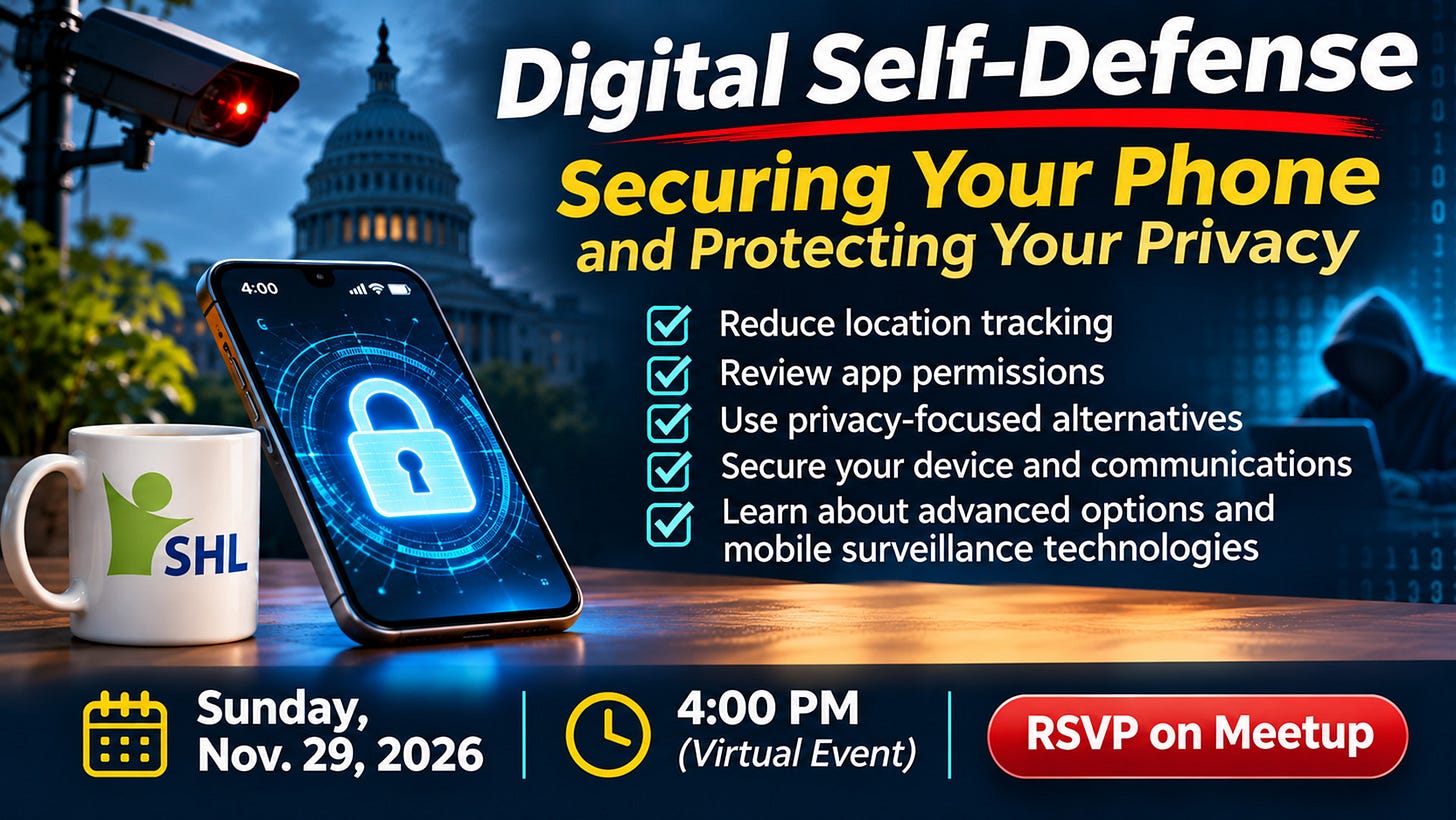
Join the Secular Humanists of the Lowcountry on Sunday, November 29 at 4 pm for a virtual presentation led by a local cybersecurity professional, focusing on how our smartphones track us and what ordinary people can do to better protect themselves.
We’ll explore practical ways to reduce location tracking, review app permissions, choose privacy-focused alternatives, and improve device security. We’ll also discuss encrypted messaging apps like Signal, more advanced privacy options, and technologies used to track mobile phones.
The goal isn’t to turn everyone into a cybersecurity expert. It’s to help us understand the information we’re giving away, the risks that creates, and the relatively simple changes we can make to take greater control of our digital lives.
The meeting will be held virtually on the Google Meet video-teleconferencing platform. The meeting link will be sent through Meetup via email to all RSVPs prior to the event. If you would like to participate without using Meetup, email shl@lowcountryhumanists.org.